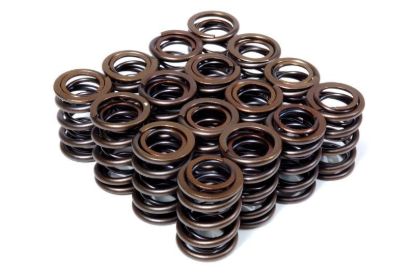
Supertech BMW M50/M52/S50/S52 Dual Valve Spring - Set of 24
sptSPR-H1005D-24
Supertech BMW M50/M52/S50/S52 Dual Valve Spring - Set of 24
402,29 € excl. VAT
Is your engine starting to lose power high in the rev range after switching to a more aggressive camshaft? Dual valve springs have an inner and an outer spring that together can provide higher spring pressure and better valve control. They are for you if you have an engine project with higher lift, more revs or more boost.
The valve springs close the valves and keep the valvetrain in contact with the camshaft. With a more aggressive camshaft, higher revs or more boost, stock springs can become too weak, so the valve does not follow the cam. This can cost performance and, in the worst case, cause contact between valve and piston. Dual springs spread the load over two springs and can therefore typically provide more pressure in the same space. In this category you will find, for example, springs from Brian Crower for the Toyota 2JZGTE and from BLOX Racing for K20A and K24A engines. If the engine is only lightly modified, single valve springs may be enough.
The choice depends on several factors, not just the highest spring pressure:
Installation requires experience with cylinder heads and often matching retainers and seats. If you are unsure about the spring type, you can compare with the other valve springs.
It depends on the spring and the cylinder head. Dual springs have an inner spring that the retainer and seat must be able to locate, so stock parts do not always fit. Check the manufacturer's recommendations for the specific part number before you order.
You need one spring per valve. A four-cylinder engine with four valves per cylinder needs 16, a six-cylinder 24. Check whether the product is sold individually or as a set so you get the right quantity.
Yes, excessive spring pressure can increase wear on the camshaft, rocker arms or lifters and cause more friction. So choose the springs based on the camshaft's specifications and how the engine is used rather than on the highest pressure.